
48 Hours in Iloilo: A Curated Guide to the City's Best Experiences

Two days is enough time to fall for Iloilo City — but only if you spend them well. This is the itinerary we’d hand a friend staying with us at Vermillion: heavy on heritage and heavier on food, with room left over for the kind of unplanned wandering that ends up being the best part of any trip.
Day One: Heritage and History

Morning

Jaro Cathedral – Start in Jaro, at the National Shrine of Our Lady of Candles — better known simply as Jaro Cathedral. Established in 1575 and rebuilt in its present form in 1874, it’s the seat of the Archdiocese of Jaro and one of only a handful of national shrines across the Visayas and Mindanao. Take your time here; the building has centuries of layered history behind its facade.

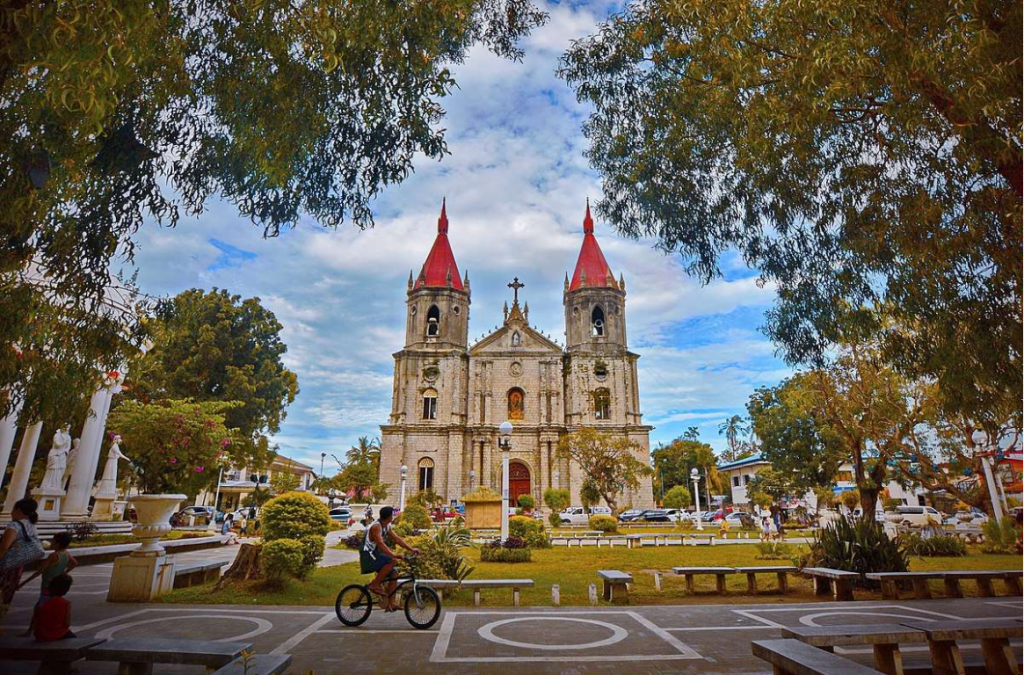
Santa Ana Parish Church (Molo Church) – A short drive to Molo brings you to Santa Ana Parish Church, a striking Spanish neo-Gothic structure known locally as “the women’s church” — a nod to its interior, which features exclusively female saints. Declared a national landmark in 1992, it’s one of the most photographed churches in the city for good reason.

Lunch

Roberto’s – No visit to downtown Iloilo is complete without Roberto’s, the legendary siopao institution running since 1978. Order the King or Queen siopao — generously packed with pork, chicken, Chinese sausage, and egg — and understand immediately why locals have been loyal for nearly five decades.

Afternoon

La Paz Market and Madge Café – Wander through La Paz Public Market, a living piece of the city dating back to the 1920s, then settle in at Madge Café for coffee brewed exactly the way it has been since 1951 — strong, hand-poured, served in classic porcelain.

Evening

Tatoy’s Manokan and Seafood – End the day at Villa Beach, where Tatoy’s has been serving native-style grilled chicken and fresh seafood in open-air nipa huts for generations. Order the charcoal-grilled chicken, then work your way through oysters, crabs, and baked scallops as the sun goes down over the water.

Day Two: Culture and Coastline

Morning

ILOMOCA and Museo Iloilo – Spend your morning with art and artifacts side by side. ILOMOCA, the first contemporary art museum in the Visayas, showcases work that engages directly with social and cultural questions, while Museo Iloilo — the first government-sponsored provincial museum outside Metro Manila — houses a deeper collection of the region’s cultural heritage.

Lunch

Breakthrough Restaurant – Head back to the coast for Breakthrough, an open-air seaside favorite known for oysters, crabs, and whatever came off the boats that morning. The ocean view is free; the seafood is worth every peso.

Afternoon

Sunset Boulevard – Wind down at Sunset Boulevard in Villa, Arevalo — a relaxed coastal stretch of open-air eateries where locals gather to watch the sky change color over the Iloilo Strait. It’s unhurried, a little salty, and exactly the pace a second day in a new city should have.

Evening

Smallville Complex – Close out your 48 hours in Mandurriao’s Smallville Complex, once regarded as the city’s nightlife capital. Between the bars, restaurants, and late-night energy, it’s a fitting last stop before heading back to rest.

The Medical City Iloilo

Anchored by our commitment of bringing “patient partnership” to the Ilonggos, The Medical City Iloilo has embarked into a meaningful journey towards wellness. From being a challenger, we have grown into an industry leader that brought breakthroughs in Iloilo’s medical scene.

TMC Iloilo promises to continue the journey of making every patient as partners towards health and wellness with pride. But before being known as one of the leading healthcare brands in Iloilo, TMC Iloilo has also undergone trials which tested our strength. Travel back memory lane with TMC Iloilo’s journey as it sets the trend in shaping the landscape of Iloilo’s medical industry.

QualiMed Hospital Iloilo

Healthway QualiMed Hospital Iloilo was initially envisioned as a regional center for women’s and children’s health in the Panay area and the Western Visayas Region. Today, it is a 104-bed, level 2 full-service hospital providing comprehensive capabilities for in-patient and out-patient healthcare services, and also houses several specialty centers. The hospital’s goal is to deliver world-class healthcare services and amenities at par with the major medical centers in Cebu, Manila, and other cities in Southeast Asia.

Museum of Philippine Maritime History

The Iloilo Customs House (Spanish: Aduana de Iloílo; Hiligaynon: Adwana sang Iloilo) is a historical building in Iloilo City, Philippines. It was built in 1916[1] to a design by American architect Ralph Harrington Doane, then Consulting Architect of the Bureau of Public Works in the Philippine Islands. Among the three American-era customs houses in the Philippines, it is the second largest (after Manila’s) and second oldest (after Cebu’s, now known as Malacañang sa Sugbo). The building is located at Muelle Loney Street and Aduana Street along the Iloilo River and still houses the offices of the Bureau of Customs and the Bureau of Immigration in Iloilo City. At present, the Iloilo Customs House houses the Museum of Philippine Maritime of National Historical Commission of the Philippines (NHCP) at the ground floor and the office of Bureau of Customs at the upper ground floor.

Brandy Museum

The Brandy Museum is a museum dedicated to brandy. It is the first and only museum of its kind in the country. Owned and operated by Emperador, Inc., the museum opened its doors in 2022.

The museum’s gallery features a collection of preserved books, letters, brandy-making tools, and soil samples, offering visitors a glimpse into the age-old practice of brandy production. The exhibits also highlight the histories of five brandy brands under Emperador, Inc.: Fundador, Tres Capas, Terry Centenario, Garvey, Soyo, and Espléndido.

Iloilo Museum of Contemporary Arts (ILOMOCA)

The Iloilo Museum of Contemporary Art (ILOMOCA) is the first museum in the Visayas region dedicated to modern and contemporary art. It aims to enrich the community life of Iloilo province by way of exhibitions and outreach programs. ILOMOCA is envisioned as a site where ideas are constructed and engaged through art. By activating the transformative potentials of exhibitions and public programs, the museum presents art as a means and a method by which dialogues about social life can unfold.

https://www.ilomoca.org/

Museo Iloilo

Museo Iloilo is a provincial museum located near the Iloilo Provincial Capitol in Iloilo City, Philippines. It is the first government-sponsored museum in the Philippines outside of Metro Manila. The museum houses a collection of Iloilo’s cultural heritage.

Museo Iloilo was built in 1971 and was designed by architect Sergio Penasales.

Jaro Cathedral

The National Shrine of the Our Lady of Candles, also known as the Metropolitan Cathedral of Saint Elizabeth of Hungary and colloquially as Jaro Cathedral, is a cathedral located in the district of Jaro in Iloilo City, on the island of Panay in the Philippines. The seat of the Roman Catholic Archdiocese of Jaro, it was placed under the patronage of Saint Elizabeth of Hungary. It was established in 1575 as a visita (chapel-of-ease) of Oton by the Augustinians and as a separate parish in 1587. The present-day structure of Jaro Cathedral was built in 1874.

The Catholic Bishops’ Conference of the Philippines formally declared the cathedral the National Shrine of Our Lady of Candles (Nuestra Señora de la Candelaria) in 2012. The cathedral is the fourth national shrine in the Visayas and Mindanao, after the Basilica del Santo Niño in Cebu (1965), Mandaue Church (2001), and Virgen de la Regla Church in Lapu-Lapu City (2007). Likewise, it is also the second Marian-dedicated national shrine in Visayas and Mindanao, and the first in Western Visayas.

St. Anne’s Parish Church

Santa Ana Parish Church, commonly known as Molo Church, is a Spanish neo-Gothic Roman Catholic church located in the district of Molo in Iloilo City, in the Philippines. It is under the jurisdiction of the Archdiocese of Jaro. The church is recognized as “the women’s church” or “the feminist church” because it only features images of female saints inside, including Saint Anne, the patron saint of Molo. The National Historical Institute declared it a national landmark in 1992.

Sunset Boulevard

Sunset Boulevard Iloilo is a scenic coastal stretch in Villa, Arevalo, where locals and visitors gather to unwind by the sea and enjoy breathtaking sunset views. Lined with open-air seafood eateries, casual hangouts, and spots for leisurely walks, the boulevard is a favorite destination for family dinners, romantic dates, or simply watching the sky turn golden over the waters of Iloilo Strait. With its vibrant yet laid-back charm, Sunset Boulevard perfectly blends food, scenery, and the coastal lifestyle Iloilo is known for.

Smallville Complex

Smallville Business Complex, also known as Smallville Complex or simply Smallville, is a commercial and entertainment district located in Mandurriao, Iloilo City, Philippines. It is one of the city’s nightlife areas, and was once regarded as Iloilo’s nightlife capital before subsequent developments expanded across the district of Mandurriao. The area is known for its bars, nightclubs, restaurants, and hotels.

Originally, the term “Smallville” specifically referred to a complex of restaurants, bars, and clubs situated adjacent to the Iloilo Business Hotel. As the area expanded, “Smallville” continued to be used to describe the broader vicinity, which now includes the original Smallville Commercial Complex and extends to Riverside Boardwalk, another establishment near the Iloilo River Esplanade.

Atria Park District

Atria Park District is a 32-hectare (79-acre) master-planned, mixed-use development located in the district of Mandurriao, Iloilo City, Philippines by Ayala Land, Inc. It features residential buildings, office buildings, outdoor malls, and an educational and a medical institution.

The property is a joint venture with Kauuturan Pison Development Corporation (KAPIDECO) Group, located in Barangay San Rafael, Mandurriao, which used to be covered with vast salt beds. The property also includes a 35-foot Pison Chimney Monument.

Iloilo Business Park

Iloilo Business Park (also known as IBP or Megaworld) is a 72-hectare (180-acre) mixed-use master-planned central business district in Mandurriao, Iloilo City, Philippines by Megaworld Corporation. It is an integrated township project featuring a financial district, a lifestyle mall, office buildings catering to business process outsourcing firms, boutique and deluxe hotels, a convention center, and medical services facilities.

Iloilo Business Park was the site of Mandurriao Airport, the former main airport of Iloilo until 2007, when Megaworld Corporation acquired the property and developed it into a mixed-use development. Since then, the area has experienced significant growth and is now bounded by two other major developments in Mandurriao, namely SM Iloilo of SM Prime to its east and Atria Park District of Ayala Land to its southeast.

SM City Iloilo

SM City Iloilo (also known locally as SM Mandurriao) is a large shopping mall in Mandurriao, Iloilo City, Philippines, owned and operated by SM Prime Holdings. It is the 8th SM Supermall built by the company. It is located along Senator Benigno Aquino Jr. Avenue (Diversion Road) in the district of Mandurriao. It has a land area of 170,000 m2 (1,800,000 sq ft) and a total gross floor area of 181,657 m2 (1,955,340 sq ft).

Roberto's

Roberto’s Iloilo is a legendary eatery in the heart of downtown Iloilo City, best known for its iconic siopao that has become a culinary institution for locals and visitors alike. Established in 1978, this family-run restaurant has earned a loyal following for its generous fillings of pork, chicken, Chinese sausage, and egg, all packed into their famous King and Queen siopao varieties. Beyond siopao, Roberto’s also serves classic Filipino-Chinese comfort food, making it a must-visit destination for anyone craving authentic flavors and a true taste of Iloilo’s food heritage.

Tatoy's Manokan and Seafood

Tatoy’s Manokan and Seafood is one of Iloilo’s most famous seaside restaurants, celebrated for its native-style grilled chicken (manokan) and wide selection of freshly caught seafood. Located along the coast of Villa Beach, Tatoy’s offers a laid-back, homegrown dining experience where rustic nipa huts and open-air cottages set the perfect backdrop for enjoying Ilonggo favorites. From their signature charcoal-grilled chicken to oysters, crabs, and baked scallops, Tatoy’s has become a staple stop for locals and travelers alike who want to savor authentic flavors by the sea.

Madge Café

Madge Café is an iconic local coffee spot tucked inside La Paz Public Market, serving generations of Ilonggos since 1951. Famous for its strong, hand-brewed native coffee poured in classic porcelain cups, the café captures the true charm of Iloilo’s coffee culture. With its rustic atmosphere, personalized brews (they remember how you take your coffee!), and loyal community of patrons, Madge Café is more than just a place to drink coffee—it’s a cultural landmark and a must-visit for anyone seeking an authentic Ilonggo experience.

Breakthrough Restaurant

Breakthrough Restaurant Iloilo is a beloved seaside dining destination, famous for its fresh seafood, authentic Ilonggo dishes, and warm Filipino hospitality. Nestled along Villa Beach, the restaurant offers an open-air setting where guests can enjoy panoramic ocean views while savoring the day’s freshest catch—straight from the waters to the table. Known for its signature oysters, crabs, and grilled specialties, Breakthrough is a must-visit for families, friends, and travelers seeking an unforgettable taste of Iloilo’s coastal flavors.

Fish Port Complex

The Iloilo Fish Port Complex (IFPC) is a fishing port and fish market in Iloilo City, Philippines. It serves as a major center for fish trading and marine product processing in the Visayas region. The complex is situated on a 21-hectare reclaimed area in Barangay Tanza, Iloilo City Proper.

IFPC has been the primary landing site for bagnetters and various fishing bancas from Iloilo City and its surrounding towns. The location has positioned the port complex as the principal source of fish for Iloilo City’s major public markets and adjacent municipalities.

La Paz Market

La Paz has been operated its own market even before its conglomeration with Iloilo City in 1937. The current La Paz Public Market traces its origins to the early 1920s, evolving from a reclaimed fishpond filled with dredged materials from the Iloilo River, as documented in the Quarterly Bulletin of the Bureau of Public Works in 1918. The main market building, showcasing an Art Deco design typical of its era, was constructed between the 1920s and 1930s.

After World War II, the market resumed operations with a general covered area where vendors sold goods on tables or makeshift kiosks. In the 1960s, during the tenure of Vice Mayor Dicen, public stalls were erected and rented out to vendors. Subsequently, walls were installed between stalls, which were then individually leased.